


March 25, 2026
By Dai Ting Viki, Vento Xu Baowen, Liu Caohuanxin Bonnie, Guo Wenchang JeC, Hong Kong Baptist University Journalism Students
Hong Kong’s RWA Moment
Hong Kong is set to issue its first licenses for fiat-referenced stablecoin issuers in March 2026, marking a key milestone in its digital asset regulatory framework. The city is positioning itself as a leading global hub for real-world asset (RWA) tokenization through proactive regulation and its unique role as a gateway to China.

Asset tokenization is moving from pilot projects into the financial mainstream, reshaping market infrastructure from collateral mobility to 24/7 settlement. Major institutions are driving the shift: J.P. Morgan’s Tokenized Collateral Network has completed on-chain collateral settlement for mainstream counterparties; UBS Asset Management issued a tokenized money market fund under Singapore’s Project Guardian; and HSBC launched a platform to tokenize physical gold. Industry trackers estimate tokenized RWAs on public chains now exceed tens of billions of dollars, with expectations that the addressable market could reach multiple trillions by 2030.
Building Guardrails for Tokenization
Hong Kong is establishing clear guardrails for tokenization. The Securities and Futures Commission (SFC) has issued guidance for tokenizing authorized investment products, and global firms are testing tokenized cash and securities in the city. RWAs span government securities and money-market instruments, private credit, real estate and commodities such as gold and silver, with emerging applications in entertainment and sport.“Starting from last year, we started to tokenize our silver assets, because the silver’s price went up very rapidly last year,” said Ronald Tan, CEO of Timeless Resources Holdings. SilverTimes, the company’s flagship product, is a real-world asset (RWA) token deployed on the Ethereum network that gives investors synthetic exposure to the spot price of silver through an underlying portfolio of physical silver, futures contracts, cash equivalents and U.S. Treasury bills. By combining bullion with derivatives and short-term fixed income, the structure aims to track silver closely while using futures and Treasuries to hedge volatility and generate revenue to cover operating costs, rather than relying purely on fees. Investors can mint new tokens after completing know-your-customer checks at designated facilities and, crucially, can redeem their holdings for physical silver, with independent Proof of Reserves audits designed to verify that on-chain balances are fully backed by off‑chain assets.

Hong Kong’s competition strategy centers on proactive regulatory leadership through Policy Declaration 2.0 and the LEAP framework, which set out a four-pillar plan to simplify rules, expand products, advance use cases and foster talent collaboration. LEAP explicitly targets legal and regulatory review for tokenized securities, and the government has framed LEAP to cover stablecoins, exchange-traded funds and other tokenized instruments. Market participants and recent industry discussions report growing institutional testing and pilot activity as regulators and firms coordinate on custody, settlement and product design.
A Different Path From Singapore and the U.S.
Compared with Singapore, Hong Kong is positioned to be more accommodating to retail participation under appropriate safeguards and is therefore seen as having larger near-term market potential. “Hong Kong’s unique position as a gateway to China gives it an unrivaled edge in onboarding mainland assets,” noted David Han from Auros Ventures. The Policy Declaration’s emphasis on widening tokenized product scope and on practical market access supports broader investor inclusion while keeping regulatory guardrails.
Market voices highlight Hong Kong’s role as a channel for Greater China issuers, which can amplify scale and liquidity relative to smaller regional centers. Hong Kong is advancing a unified, principles-based regulatory regime to deliver legal clarity and operational interoperability between tokenized assets and traditional market infrastructure.
The European Union and the United States have also moved toward clearer frameworks — the EU’s MiCA-era rules and U.S. proposals such as drafts around stablecoin and tokenization oversight — which align key principles while differing in scope and timing, helping create a more predictable cross-border landscape. For RWA issuers, MiCA gives the clearest cross-border certainty: one authorization covers all 27 EU states. Hong Kong offers clarity for Asia-focused projects with its VATP and 1/4/7/9 licensing stack, while the United States remains a “compliance minefield” without federal RWA legislation. Hong Kong’s legislative push on stablecoin rules and tokenization guidance, combined with active industry engagement, improves near-term certainty for institutional RWA products and positions the city as a pragmatic gateway for Asian tokenized issuance.
Liquidity and Complexity: The Core Bottlenecks
While RWA is drawing a growing number of investors to Hong Kong, the sector’s key bottlenecks remain: insufficient asset liquidity, complex internal systems and inconsistent regulations. Liquidity is the critical step in transforming RWA from simple asset digitalization into full financialization.“Ensuring the market likes this RWA asset means considering how customers can cash out,” said Ayishah Ma, vice president of Arta Global Market Ltd. Only when tokens can circulate efficiently in secondary markets can real-world value be unlocked and more mainstream capital attracted.

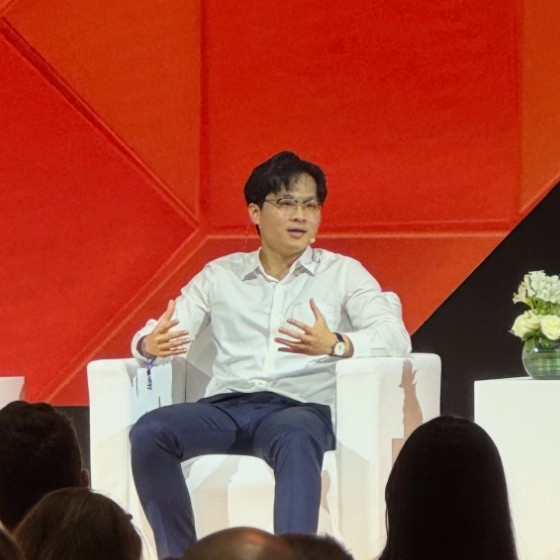
The tokenization process also creates unprecedented complexity for regulators. “It’s a perfect network you cannot control very carefully,” noted Tommy Chan from crypto.com Capital, as systems must bridge real-world legal compliance, asset tracking, and digital elements like cross-chain technology and smart contracts. Regulators have to verify asset authenticity while penetrating complex code and cross-chain interactions; according to Chan, this currently makes it difficult to handle issues such as anti-money laundering and high-risk transactions, rendering traditional regulatory frameworks inadequate.Tommy Chan said, “I do think that once we see more regulatory clarity in terms of what we can do and what we cannot do for both the insurance perspective and the investor’s perspective… then we will see exactly how big this market could grow in the next 10-20 years.”
Hong Kong’s RWA Test: Quality and Exit Paths
Hong Kong has laid a solid foundation for RWA growth: clearer regulations, stronger institutional support and its unique role as China’s gateway for digital assets. However, several challenges must be addressed before the market can truly take off.
Liquidity and asset quality remain crucial. Ma emphasized the need for practical thinking: “Before doing any RWA tokenization, you need to think about who will buy from you and why they would buy.” She suggested focusing on liquid assets like rental income rights rather than entire buildings, because “the secondary market is very important, and you must show clients how they can exit.”
Retail investors are expected to come, but slowly. Ma expects the market to stay institution-heavy for now, with regulators and everyday investors both needing time to find their feet. That cautious path lines up with Hong Kong’s decision to move stablecoin licensing and tokenization within a controlled, heavily supervised framework rather than a free-for-all.
The next one to three years will be telling. With stablecoin legislation launching in 2025 and the LEAP framework now in place, Hong Kong could see more institutional RWA products emerging and scaling between now and 2028. Yet whether it becomes a global RWA hub ultimately depends on attracting quality assets and sufficient liquidity — and on proving that tokenization in Hong Kong can deliver both regulatory safety and market-level exit options for investors
About the Editor
Joe Pan teaches Asia’s first Master of Journalism course on “Covering Cryptocurrency and Blockchain” at Hong Kong Baptist University. He is a contributing editor at Blockwind News. An early adopter of blockchain technology, he has covered major crypto conferences globally since 2019 and moderated Web3 events across Asia.
